
Chapter One of the Tea Masterclass: Terms, Definitions, and Tea Taxonomy
This chapter introduces the meaning of the word tea and lays out a framework for understanding tea terminology. The world of tea is vast, with hundreds or thousands of varietals from different areas and countries, so this overview starts with the basic definition of tea and then moves into major types and subtypes.
The central summary of the chapter is simple: the word tea describes two very different beverage types, herbal tea and Camellia sinensis-based tea. The latter is true tea, and it includes six major types: green tea, black tea, oolong tea, white tea, yellow tea, and dark tea.
The Tree of Tea
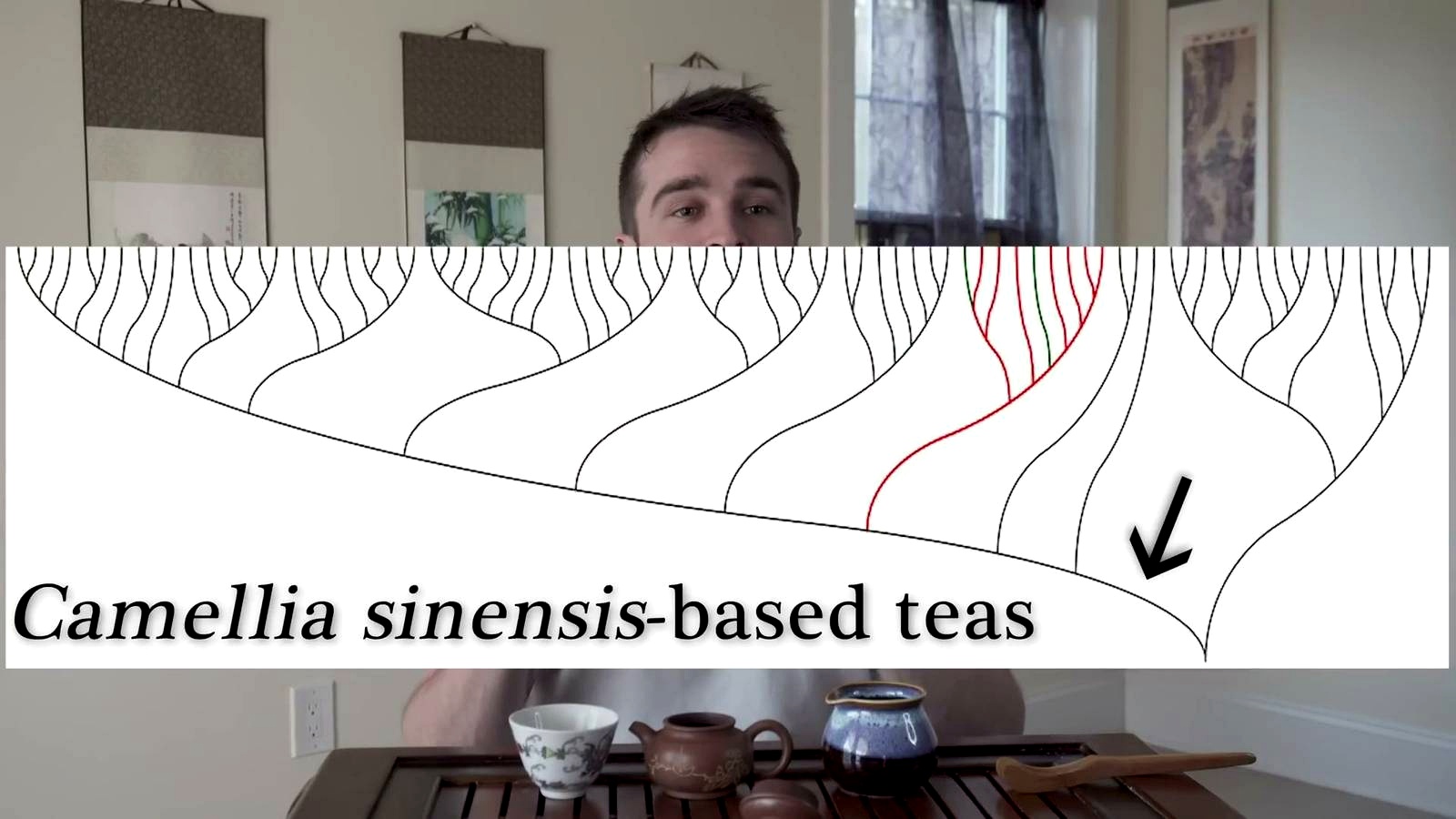
The chapter uses the image of a tree to explain tea taxonomy. At the trunk of this “tree of tea,” there is a first major split into two branches:
- Camellia sinensis-based teas
- Herbal teas
Camellia sinensis is the scientific Latin name for the tea plant. It is one species of plant, and it is the basis for all of the teas discussed in this chapter. Herbal tea, by contrast, refers to infusions made from any non-Camellia sinensis plant.
Examples of herbal teas mentioned include chamomile, peppermint, ginseng, and even pine needle herbal tea. However, herbal tea is not the focus of the masterclass. The course focuses almost entirely on Camellia sinensis-based tea.
The Six Major Types of True Tea
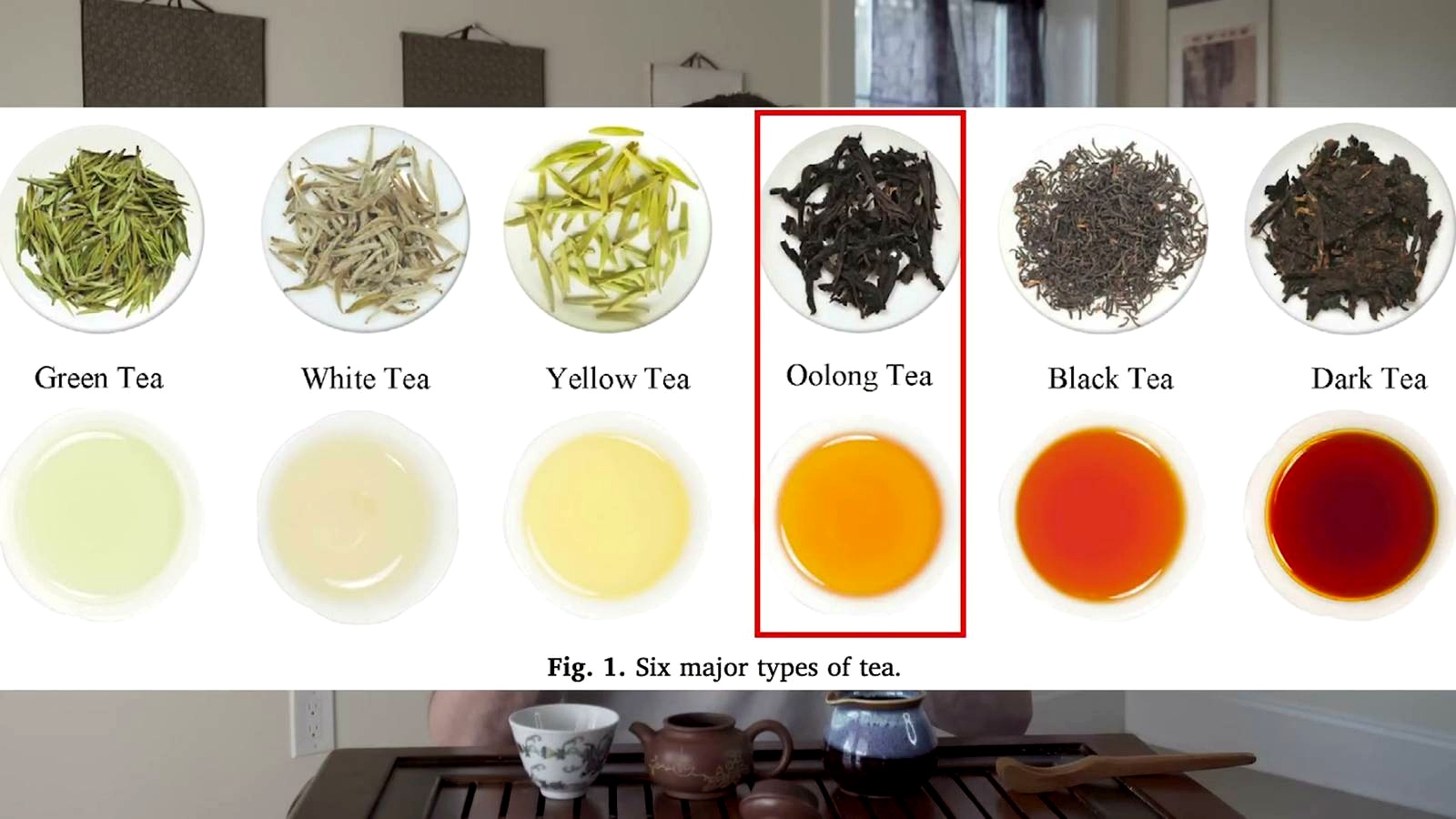
Camellia sinensis-based tea branches into six major tea types. These are often referred to in literature and scientific research as the six major processing types or the six major tea types.
- Green tea
- Black tea
- Oolong tea
- White tea
- Yellow tea
- Dark tea
These tea types are created only after the leaf is plucked from the tea plant. The raw green tea leaf is then processed differently to produce one of these six major types.
Green Tea

With green tea, the first important processing step is applying heat to the leaves. This preserves the green color and the green characteristics of taste, aroma, and color. This first heating step is called fixing.
The two primary fixing methods are:
- Steaming the leaves
- Pan-firing the leaves
Steamed green tea is far more common in Japan, while pan-fired green tea is much more common in China, although some Chinese green teas are also steamed.
The method of fixing greatly affects how the tea looks, tastes, and smells:
- Steamed green teas are more vegetal, grassy, and green in general.
- Pan-fired green teas tend to have more toasty, nutty, roasting chestnut aroma characteristics.
A Taxonomy Example: Dragonwell
To show how deep tea taxonomy can go, the chapter follows one green tea branch from trunk to tip. Starting with pan-fired green tea, the teas can then branch by shape. Five shapes are mentioned:
- Slender shape
- Flat blade-like shape
- Needle shape
- Pearl or rounded ball shape
- Corkscrew shape
Within the flat blade-shaped pan-fired green teas, three examples are given:
- Dragonwell
- Da Fang
- Qi Qiang
Dragonwell is described as the most famous of these three and is known as the king of green teas in China.
Within Dragonwell, three location distinctions are given:
- West Lake
- Qi Qiang
- Yue Zhou
West Lake is described as the core, heart, and epicenter of Dragonwell processing and creation.
Within West Lake Dragonwell, commonly used cultivars include:
- Longjing 43
- Ping Yang Tezao
- Wu Niu Zao
- Zhe Nong 139
- 117
- Qunti Zhong
Qunti Zhong refers to native cultivars grown from seed rather than propagated through cloning.
Tea can then be differentiated by season of harvest. Unlike wine, which is harvested once per year, tea may be harvested four or five times depending on region, climate, and other factors. For West Lake Dragonwell made from Ping Yang Tezao, the chapter identifies:
- First flush, usually before April 5th, called pre-Qing
- Second flush, before about April 21st, called pre-rain
- Late spring or early summer harvest
- Summer harvest
- Fall harvest
First flush is described as the first growth of the tea plant in spring and as the most flavorful, most coveted, highly priced, highly praised, delicious high-grade tea. As the year goes on, both price and general quality drop.
The final layer in the example is plucking style, meaning which parts of the tea plant are picked:
- Top bud and maybe one tiny first leaf: special grade
- One bud plus one full leaf: first grade
- One bud and two leaves: second grade
- Further down the stalk: fourth grade
- Usually no higher than fifth grade for West Lake Dragonwell
This example shows how a tea name can contain many layers and how each branch point affects taste, aroma, color, price, and demand.
Green Teas Mentioned
Chinese green teas mentioned include:
- Duyun Maojian
- Xinyang Maojian
- Dragonwell
- Biluo Chun
- Anji Bai Cha
Japanese green teas mentioned include:
- Early flush Sencha
- Gyokuro
- Matcha
Matcha is also described as having its own entire sub-universe with different grades, plucks, and cultivars.
Oolong Tea
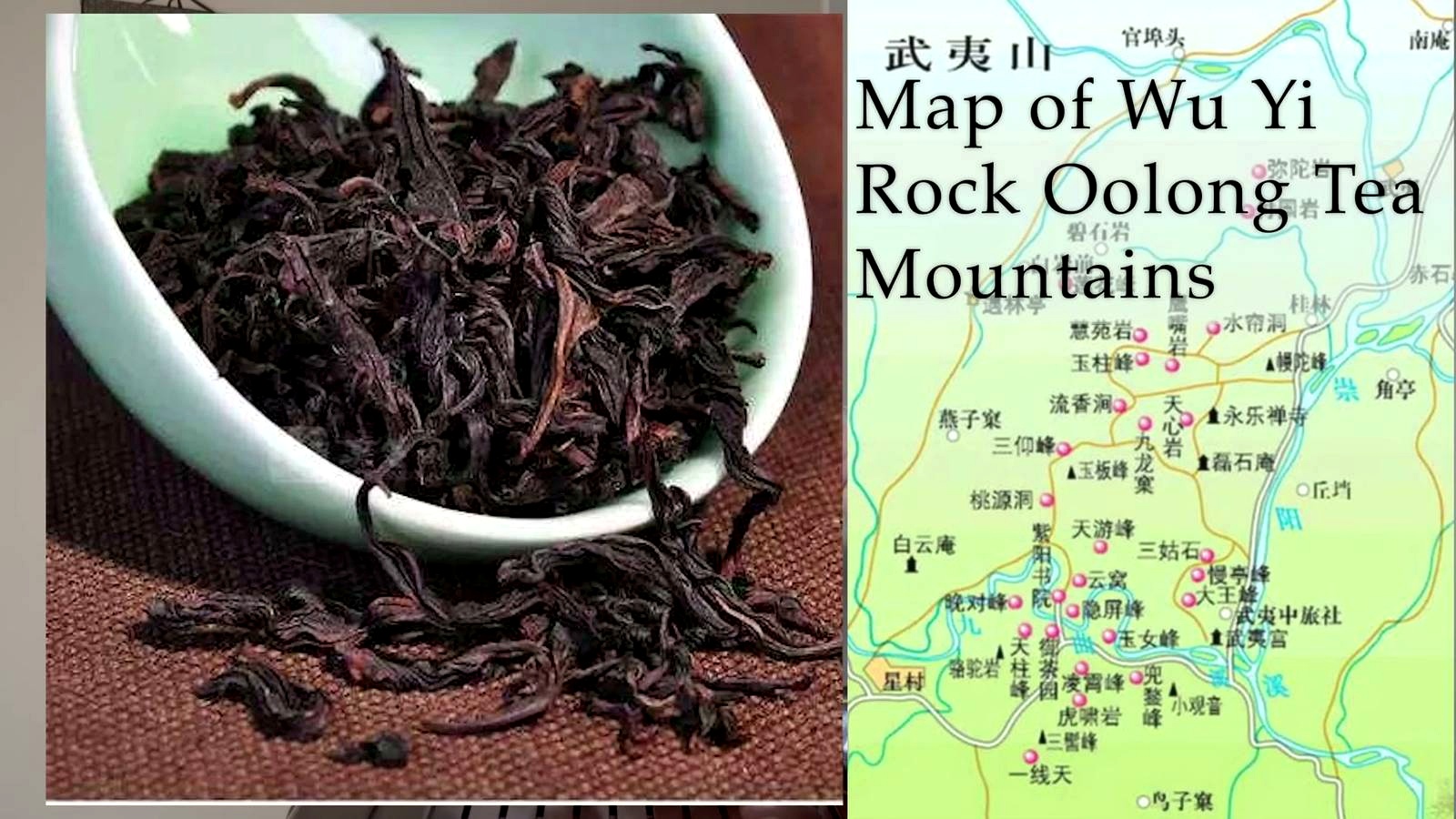
The first branch point in the oolong world is based on location. Four main oolong-producing areas are named:
- Taiwan
- Northern Fujian
- Southern Fujian
- Eastern Guangdong
The chapter states that basically all of the oolong tea in the world comes from these four areas.
Northern Fujian
Northern Fujian may have the most subtypes. Wuyi rock oolongs are highlighted, with the rocky mountainous region helping drive the evolution of new breeds, cultivars, and processing styles in different valleys.
Two important examples from Northern Fujian are:
- Da Hong Pao
- Rou Gui
Taiwan
Taiwan is distinguished by its mountains, and different mountains have their own specific types of oolongs. Examples mentioned include:
- Li Mountain
- Ali Mountain
- Dongding oolong
- Baozhong
Dongding is described as embodying the general style of Taiwan oolong.
Southern Fujian
The most famous tea from Southern Fujian is Iron Goddess of Mercy, also called TieGuanYin. It is described as a small, kernel-shaped, very lightly oxidized oolong tea.
The chapter also advises that if buying TieGuanYin, it should be organic because there have been issues with pesticide use in that area in the past.
Eastern Guangdong
Eastern Guangdong produces Dancong oolong. The most famous one in recent years is duck sh*t Dancong, described as fantastic and as having crazy umami, savory, and herbaceous qualities.
Dancong also branches into many cultivars and genotypes.
Black Tea
The main split in black tea is between:
- CTC black tea
- Whole leaf black tea
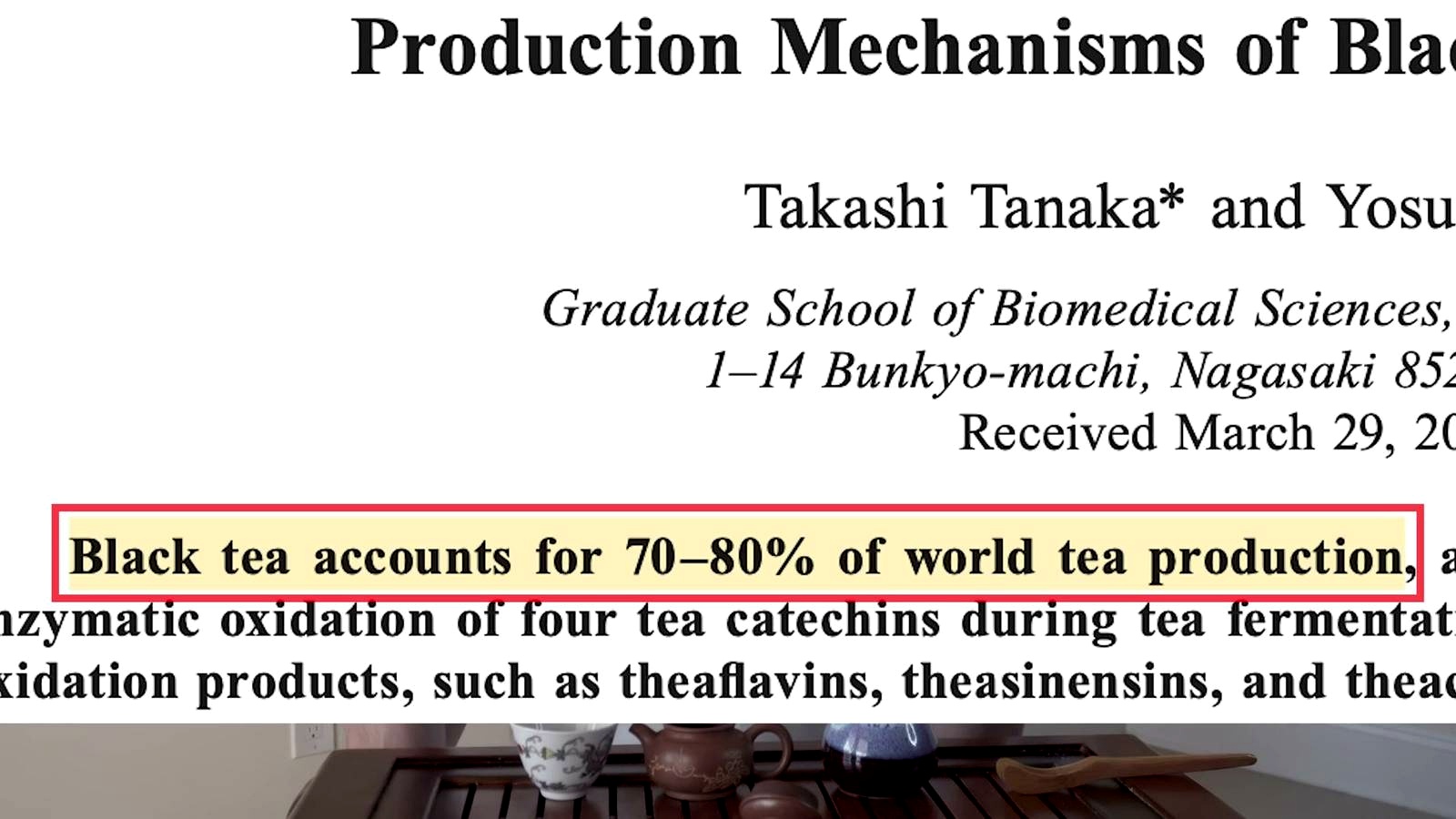
Black tea represents the vast majority of total global tea production, described as about 75 to 80 percent, or around 70 percent of total global tea production. It is widely used in industrial products such as ready-to-drink teas, Arizona iced tea, and boba because it is sweeter and more mellow than other tea types.
CTC stands for crushed, tear, curl. During processing, the leaves are heavily broken down, which homogenizes the fermentation process. CTC teas are described as generally very low grade and not the focus of the masterclass.
Whole Leaf Black Tea by Region
Whole leaf black tea is produced in many countries. Regions and countries mentioned include:
- Darjeeling in India
- Sri Lanka
- Kenya
- Uganda
The chapter notes that some Eastern African countries originally produced only CTC black tea but in recent years have begun making nicer whole leaf, more artisanal black teas.
Small Leaf and Large Leaf Black Tea
Within Camellia sinensis, two main sub-varieties are mentioned:
- Camellia sinensis sinensis, the small leaf type
- Camellia sinensis assamica, the larger leaf type
Assamica grows closer to the equator in hot and humid regions such as Sri Lanka, Kenya, India, southern China in Yunnan province, and also Guangdong. The small leaf sinensis plants are grown in northern eastern China, Korea, and Japan and are hardier in cold weather.
The flavor distinction is described as follows:
- Large leaf black teas are bolder, richer, and often malty, with robust sweet flavor.
- Small leaf black teas are more floral, fruity, and delicate, with notes such as stone fruit, apricot, peach, rose, or floral notes.
Black Teas Mentioned
- Purple leaf black tea from Kenya
- High altitude Sri Lankan Ceylon black teas
- Darjeeling black teas
- Yunnan black teas
- Yingde black tea
- Jinjunmei
- Jiuqu Hongmei
- Keemun
- Lapsang Souchong
Jiuqu Hongmei is described as a high-end black tea from the Dragonwell region. Keemun and Lapsang Souchong are said to have huge variability in grade and quality. Lapsang Souchong is noted as a smoked black tea, and the level of smokiness can vary greatly.
White Tea
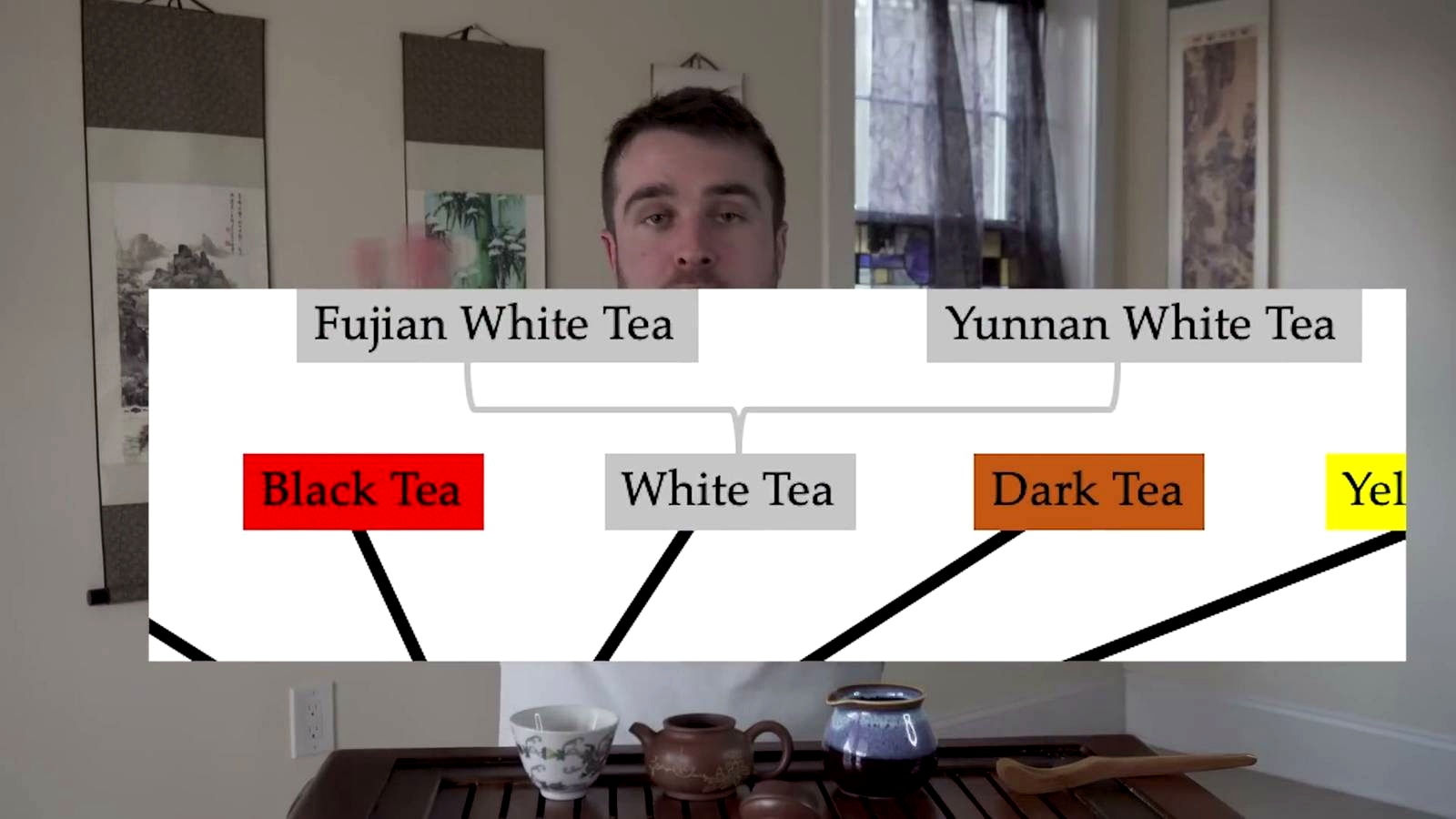
White tea is described as having very unique processing. The first distinction in white tea is between:
- Yunnan white tea
- Fujian white tea
Fujian white tea comes from more eastern and northern areas and is based on smaller leaf or hybrid cultivars. Yunnan white tea uses large leaf tea material.
Four Main White Tea Grades
White tea is divided into four main distinctions based on plucking style:
- Silver Needles
- Bai Mudan
- Gongmei
- Shoumei
These reflect different grades and plucking styles:
- Silver Needles: just the bud
- Bai Mudan: one bud and two leaves
- Gongmei: one bud and three to four leaves
- Shoumei: mostly leaves, with very little bud material
Silver Needles are described as the champagne of teas, extremely refined and delicate. Bai Mudan style is said to have much more punch, with sappy, rich, sugary sweetness and thick body, while Silver Needles are lighter, crisper, and more refined.
White Teas Mentioned
A notable Yunnan white tea is Moonlight White Tea, which is a Bai Mudan plucking style. Its name comes from the appearance created during the long withering step: white or silver hairs on dark gray or almost black leaves, creating a white-on-black effect.
In Fujian, two main white tea producing regions are mentioned:
- Fuding
- Zhenghe
Fuding white tea is described as more vegetal, green, crisp, and light. Zhenghe white tea is more fruity, sappy, sweet, and sugary.
Aging White Tea
One of the chapter’s key points about white tea is that it ages like fine wine. White tea is often stored in cakes, and over time its flavor transforms and develops new notes.
A famous Chinese phrase is given to describe this aging:
- In year one, it is tea
- In year three, it is medicine
- In year seven, it is a treasure
This phrase reflects both the changing compounds in the tea over time and the traditional idea that age-induced compounds have more medicinal properties than fresh tea.
Dark Tea
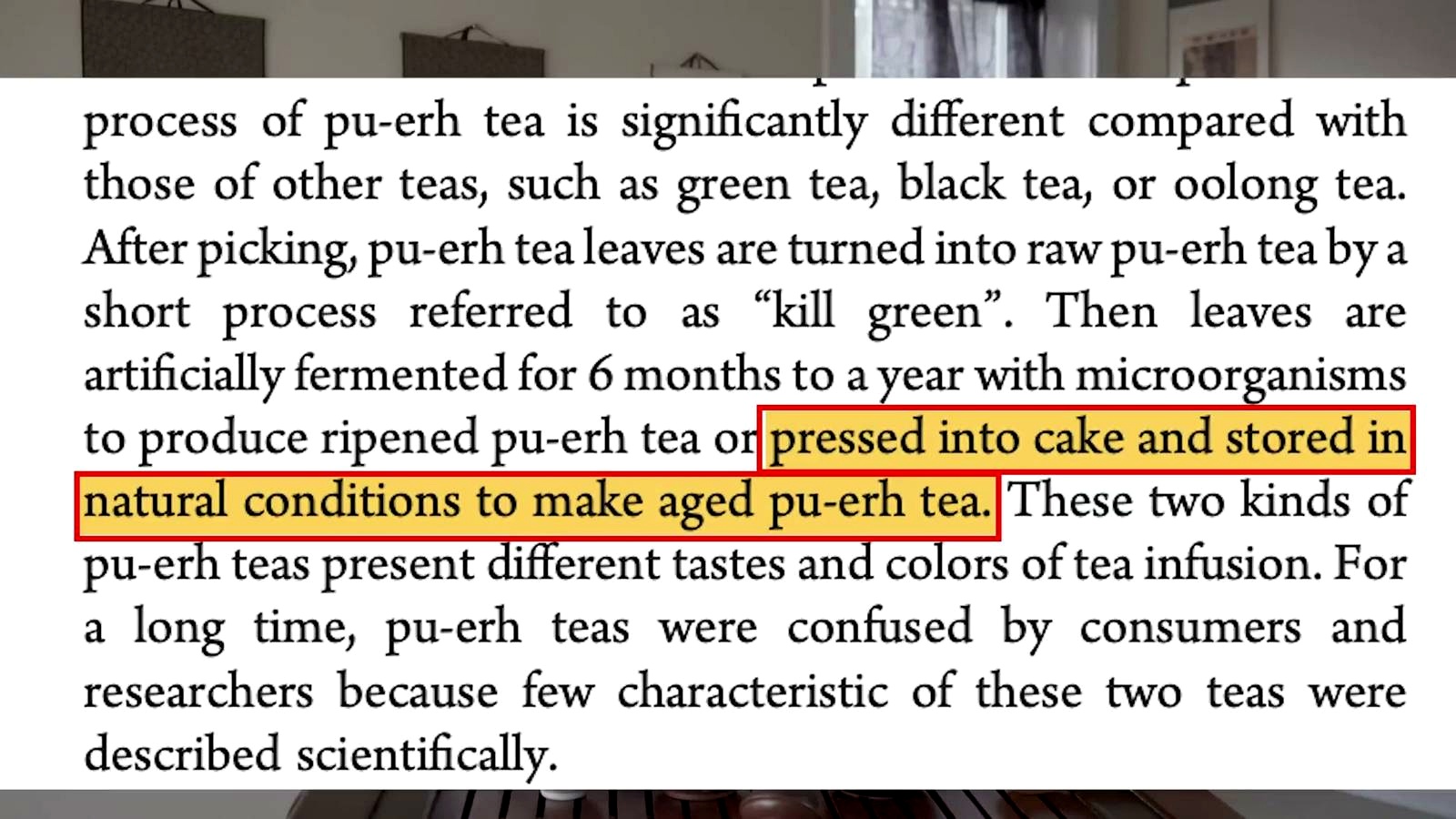
Dark tea connects naturally with the discussion of aging. It is described as a tea type strongly shaped by aging, and the most famous dark tea is pu-erh.
Dark tea is mostly produced in China, and different provinces developed their own styles over time. Pu-erh is the dark tea from Yunnan province.
Pu-erh splits into:
- Raw pu-erh
- Ripe pu-erh
Other Dark Teas Mentioned
- Liubao
- Fuzhuan Cha
- Qianliang Cha
- Qingzhuan Cha
- Zang Cha
Liubao is described as a favorite non-pu-erh dark tea and as having very unique aroma and taste characteristics, although it is very hard to find. Fuzhuan Cha and Qianliang Cha are associated with Hunan province, Qingzhuan Cha with Hubei, and Zang Cha with Tibet.
Many dark teas are made from local seed-grown tea cultivars, or Qunti Zhong, meaning that each tea plant is genetically unique. Combined with aging and storage conditions such as climate and microbes in the air, this makes dark tea especially difficult to replicate from one place to another.
Yellow Tea

Yellow tea is described as a rare and unusual tea type, produced in very small quantities and consumed far less than the other major tea types. Even so, it is technically one of the six major types.
It can be thought of as a yellowed version of green tea, somewhere between green tea and dark tea. It has green tea characteristics, but they are more mellowed and yellowed out.
Yellow Tea by Plucking Style
Yellow tea is differentiated in a way similar to white tea, based on plucking style. Three main forms are mentioned:
- Huang Ya Cha
- Huang Xiao Cha
- Huang Da Cha
These correspond roughly to:
- Just buds
- Buds plus one to two leaves
- Mostly leaf material
Yellow Teas Mentioned
- Mengding Huang Ya
- Mogan Huang
- Weishan Maojian
The chapter notes that these teas are very rare to encounter.
Conclusion

This chapter maps the tea world from the trunk of the tree to the smallest branches. It distinguishes herbal tea from Camellia sinensis tea, sets aside herbal tea, and then explores the six major tea types and many of their subtypes, regions, cultivars, harvest distinctions, and styles.
The result is a clearer understanding of tea terminology and taxonomy. With that groundwork complete, the next chapter turns to tea plant biology and cultivation.
FAQ
What does the word “tea” mean in this chapter?
It describes two different beverage types: herbal tea and Camellia sinensis-based tea. The chapter focuses on Camellia sinensis-based tea, which it treats as true tea.
What are the six major types of true tea?
The six major types are green tea, black tea, oolong tea, white tea, yellow tea, and dark tea.
What is Camellia sinensis?
Camellia sinensis is the scientific Latin name for the tea plant. It is the plant that forms the basis for all of the true teas discussed in the chapter.
How is green tea first processed?
The leaves are heated at the start of processing. This step is called fixing, and the two main methods mentioned are steaming and pan-firing.
What is the difference between steamed and pan-fired green tea?
Steamed green teas are described as more vegetal, grassy, and green. Pan-fired green teas are described as more toasty, nutty, and chestnut-like in aroma.
What are the four main oolong-producing areas?
The four areas mentioned are Taiwan, Northern Fujian, Southern Fujian, and Eastern Guangdong.
What is the main split in black tea?
The first split is between CTC black tea and whole leaf black tea.
How is white tea commonly graded?
White tea is divided by plucking style into Silver Needles, Bai Mudan, Gongmei, and Shoumei.
What is the most famous dark tea mentioned?
The most famous dark tea mentioned is pu-erh.
How is yellow tea described?
Yellow tea is described as rare and as a mellowed, yellowed-out tea type with characteristics somewhere between green tea and dark tea.
Reference Video
